Bellevue received permit applications for more new apartment units than Seattle in the first half of 2026, despite having one-fifth the population.
Applications filed between January and June covered at least 1,585 new multifamily units in Bellevue, compared to 1,137 in Seattle, The Urbanist first reported on Aug. 26. Both figures are preliminary undercounts because developers are not required to list unit totals at the intake stage.
Three policy tools are driving the surge:
The Wilburton Supercharger. Bellevue Chamber of Commerce President Joe Fain described the program in an op-ed cited by The Urbanist: developers who set aside 20% of a project as affordable to households earning up to 80% of area median income, roughly $80,000 a year for a family of two, receive a 12-year property tax exemption on residential improvements.
The program lets builders "double count" those affordable units toward both the state's Multifamily Tax Exemption (MFTE) program and the city's mandatory affordable housing requirement. A fee-in-lieu option funds affordability elsewhere when on-site units are not the best fit.
HOMA. The Bellevue City Council adopted the Housing Opportunities in Mixed-Use Areas (HOMA) code amendment on March 17, extending the Supercharger incentive structure into mixed-use zones beyond Wilburton.
The Council also approved a temporary expansion of the Supercharger into other commercial districts, excluding Downtown, over staff recommendations and after negotiations with affordable housing advocates.
Downtown Livability 2.0. A separate rezone process for Downtown Bellevue is anticipated to launch following HOMA's March adoption, though no date has been set, according to a city planning document from November 2025.
The city is also pursuing the BelRed Look Forward code amendment for the BelRed neighborhood.
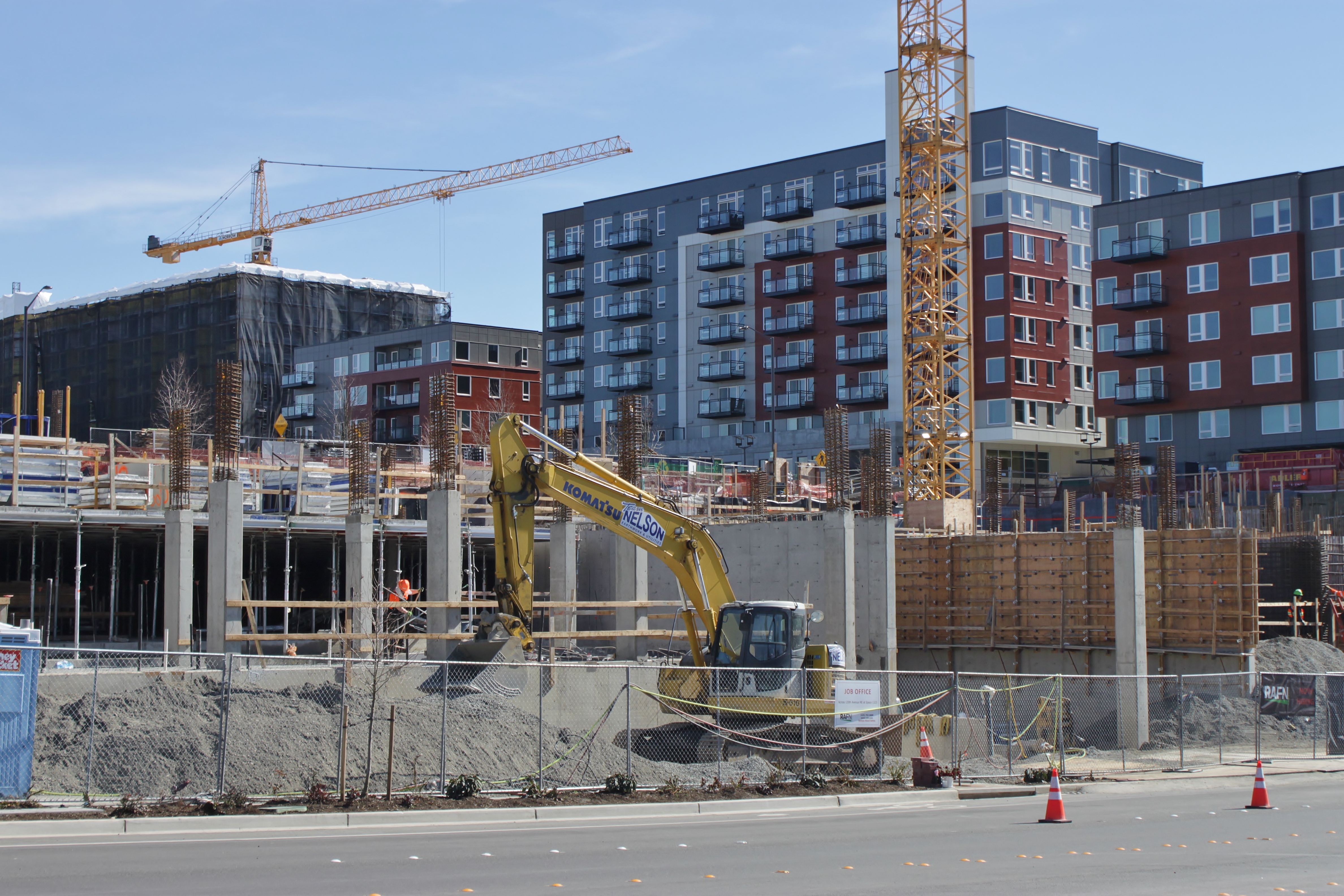
The results are visible in Wilburton, where car dealerships and surface lots are giving way to large apartment projects near the 2 Line light rail station that opened in 2024.
A 442-unit project won approval on May 4. Two more proposals followed in August: a 449-unit building on a former auto dealership site and a 378-unit complex.
Citywide, residents and builders applied for more than 18,000 permits of all types in 2025, according to a Development Services update presented to the Bellevue City Council in July. Permit first-review timeliness rose from 72% to 83% in the first quarter of 2026, according to the Bellevue Chamber's PLUSH Committee.
Seattle, meanwhile, faces a deepening slump. New housing applications are on track to decline 30% in 2026 after dropping 38% in 2025.
Seattle Mayor Katie Wilson issued an executive order on Aug. 19 to streamline permitting and launched a Housing Production Task Force, but delayed action on the city's Mandatory Housing Affordability (MHA) fees until 2027. Seattle's citywide zoning update has also been pushed into 2027 due to legal appeals from homeowner groups.
Fain has pointed to the Supercharger as a model the rest of the region should follow. Anderson said increases in housing production from recent code changes will likely appear in future data beyond what the 2026 permit numbers capture.
The next policy test: the Bellevue Chamber's PLUSH Committee formally opposed a proposed 1,500-unit cap on the city's MFTE program ahead of a May 5 Council study session. Whether the Council imposes that cap could determine how long the building boom lasts.