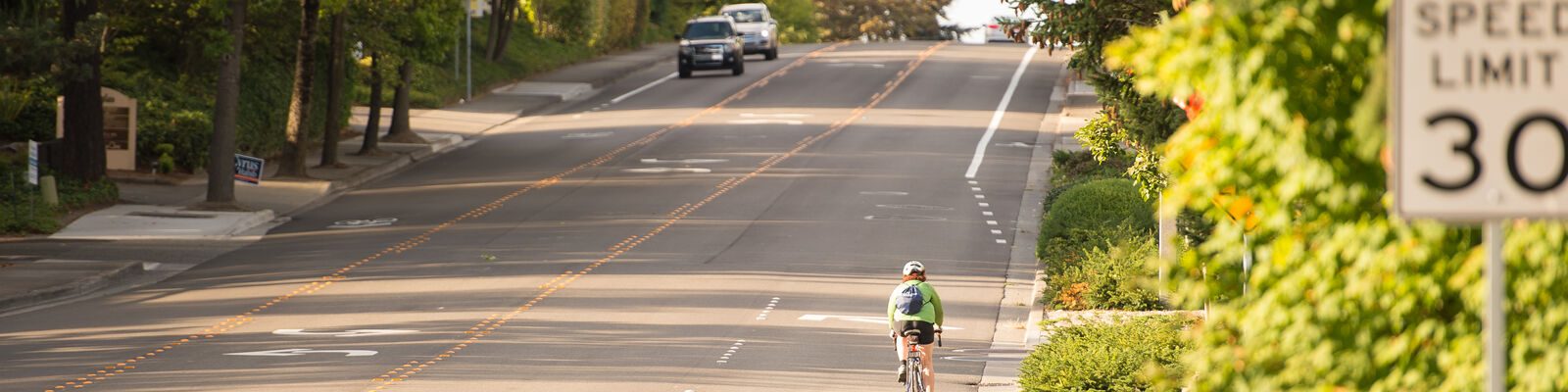
Drivers on Bellevue Way, NE 8th Street and 148th Avenue will see lower posted speed limits beginning in early 2027 under the city's Safe Speeds Bellevue program, a sweeping effort to cut fatal and serious-injury crashes on the corridors where 88% of them occur.
The Bellevue City Council approved the reductions in June, The Urbanist reported, with 84% of city streets currently posted at 30 mph or higher set for lower limits. Downtown streets will change first.
The program targets arterials that make up just 25% of Bellevue's road network but account for nearly nine out of 10 fatal and serious-injury collisions, according to city transportation data. Beyond new speed-limit signs, the city plans physical traffic-calming measures including speed cushions, raised crosswalks and lane narrowing.
At a Friday, July 24 public information session, Bellevue Transportation Department associate director of mobility operations Chris Long said 2025 produced the city's highest number of serious and fatal crashes in over a decade.
"Unfortunately 2025 was the highest [number of serious and fatal injury crashes] we've seen in over 10 years," Long said at the session. He added that the trend runs counter to the city's Vision Zero goal of eliminating fatal and serious-injury crashes by 2030.
Funding and timeline
The council approved a $4.7 million Vision Zero Safe Speeds capital budget covering 2025 through 2030, according to the city's Safe Speeds program page. A $2.787 million federal grant from the U.S. Department of Transportation's Safe Streets and Roads for All program is helping fund the initial phase.
The program builds on Ordinance 6809, which the council unanimously approved in October 2024, lowering the default speed limit on most local (non-arterial) streets from 25 to 20 mph. About 64% of Bellevue streets fall into that category.
The city also ran a pilot on four arterial corridors in July 2025. Limits on 124th Avenue SE/SE 38th Street and Northup Way dropped from 35 to 25 mph; Village Park Drive and NE 40th Street dropped from 35 to 30 mph. In the earlier Eastgate neighborhood pilot, high-end speeding fell 19% with no additional police enforcement.
What residents said
In Phase 1 community surveys conducted from June through September 2025, 74% of respondents said they believed most drivers would ignore lower limits, while 66% said they personally would follow them. Residents expressed the strongest support for physical treatments at intersections.
Speed limits on Bellevue's arterials had never been comprehensively evaluated, according to the city's Phase 1 engagement report. Most were set decades ago and never updated despite population growth and changes in land use.
The program does not affect state highways or private roads.
How to weigh in
Residents can contact the Safe Speeds project team at [email protected] or visit BellevueWA.gov/safe-speeds. As we reported July 29, the city is also collecting input on street safety improvements in BelRed and Wilburton specifically.
New signs are expected to go up as limits take effect in early 2027.