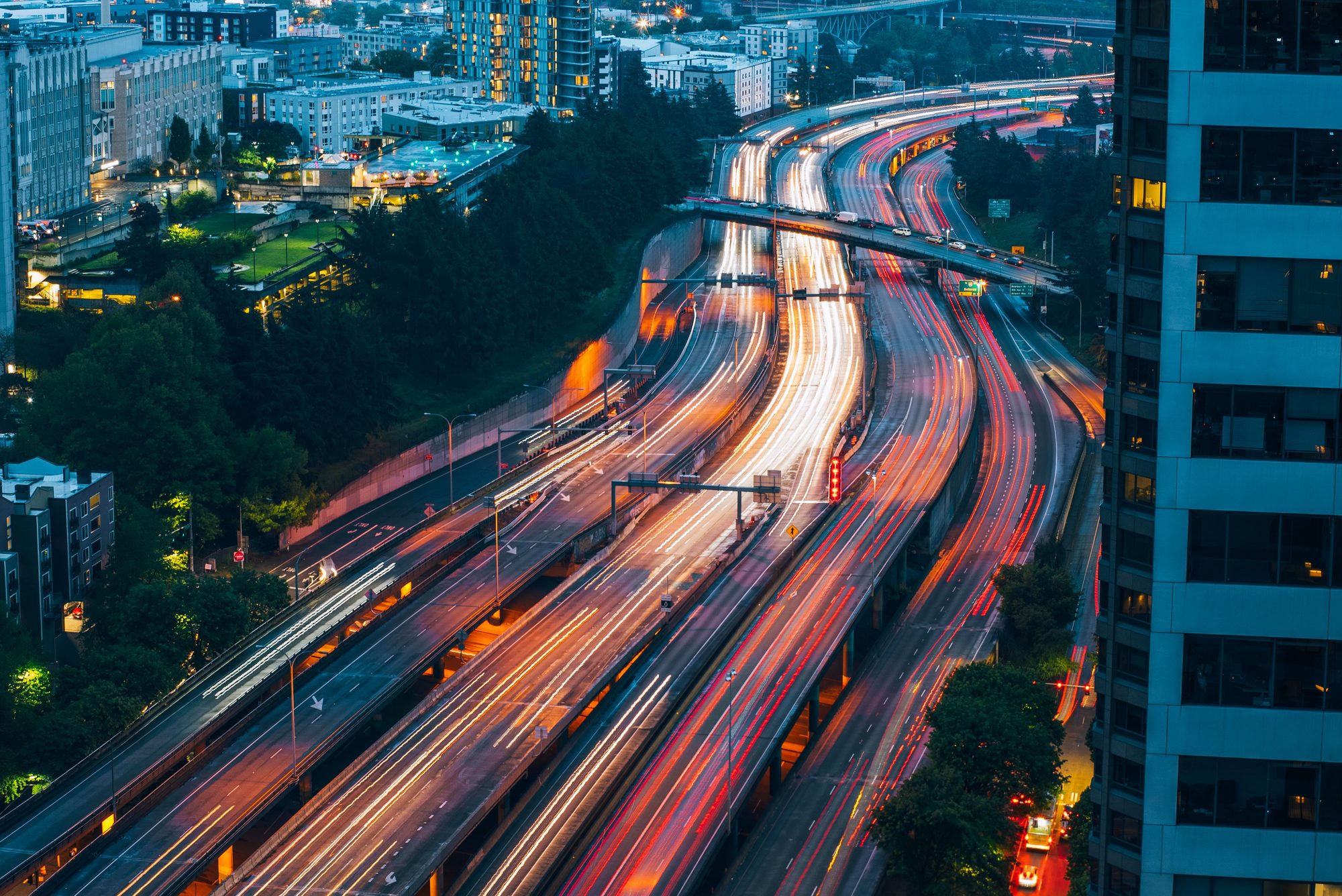
Workers in the Seattle-Tacoma-Bellevue metro spend an estimated $10,018 a year commuting, making it the fifth most expensive metro in the country for getting to work.
The figures come from a ConsumerAffairs study published Wednesday, Sept. 16, that combined average commute times, local wages, gas prices, driving distances and vehicle fuel economy.
MyNorthwest first reported on the study's local implications. Four metros ranked higher, including the San Francisco Bay Area, Washington, D.C., and New York City.
The study did not break out Bellevue-specific data, but the metro designation covers the city and its workforce.
The bulk of the cost is time. ConsumerAffairs estimated that the value of hours spent commuting accounts for about $8,500 of the annual total. The average Seattle-area commuter spends 58 minutes on the road each day, adding up to more than 244 hours a year.
That is roughly 10 full days.
Fuel costs pile on another $1,400 or more. Washington drivers are paying $5.57 per gallon for regular gasoline, according to AAA data from Thursday, Sept. 17. That is the second-highest state average in the country, behind only California at $6.08. The national average stood at $4.44.
ConsumerAffairs spokesperson Ella Gomes told MyNorthwest that housing trends could "push these time costs to be either similar or higher" as workers move farther from job centers to find affordable housing.
Bellevue's housing costs compound the problem. A March 2026 Zumper report found that Bellevue remains the highest-rent city in the Seattle metro area. Workers priced out of the city face longer drives to reach its downtown office towers and retail corridors.
Light rail offers partial relief. The Redmond extension to Marymoor Village opened May 10, 2025, and a cross-lake link to Seattle followed in March 2026. But the system has limits.
Joy Wang, a 55-year-old Sammamish resident who commutes to downtown Bellevue, told the Sammamish Independent in September that the "last mile problem" keeps many riders dependent on cars to reach stations.
Sound Transit is developing its 2027 Service Plan, which will adjust ST Express bus routes following the recent light rail openings.
The agency is also working to close a $34.5 billion funding gap projected through 2046 to deliver the voter-approved Sound Transit 3 (ST3) program, which includes a planned line between South Kirkland and Issaquah.